
ISO 17025 vs ISO 9001: Understanding the Key Similarities and Differences
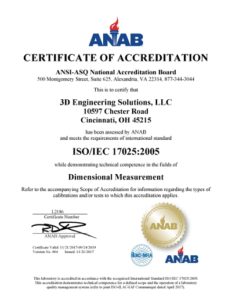
Two of the most well-known standards for quality management systems (QMS) are ISO 17025 and ISO 9001. Both aim to manage quality objectives and improvement, but have distinct scopes and applications. ISO 17025 specifies the general requirements for the competence, impartiality, and consistent operation of testing and calibration laboratories and is designed to monitor precise and reliable results. ISO 9001, on the other hand, is an international standard designed for customer satisfaction that can be applied to any organization, regardless of size, type, or industry. The following sections will delve deeper into the similarities and differences between ISO 17025 and ISO 9001, helping you understand which standard is best suited for your organization.
Key Similarities Between ISO 17025 and ISO 9001
While ISO 17025 and ISO 9001 have distinct scopes and applications, they share key similarities contributing to their effectiveness. The application of both standards concentrates on customer satisfaction. Here’s a more thorough explanation:
- Continuous Improvement: Both standards emphasize the importance of continually improving processes, products, and services to meet customer needs.
- Customer Focus: ISO 17025 and ISO 9001 prioritize meeting customer requirements to improve satisfaction.
- Management Responsibility: Both standards require top supervision to demonstrate leadership and commitment to the quality management system.
- Document and Record Control: Effective document and record management are traits of both ISO 17025 and ISO 9001 to guarantee the integrity and traceability of information.
Key Differences Between ISO 17025 and ISO 9001
Despite sharing some common elements, ISO 17025 and ISO 9001 have significant differences setting them apart. These differences arise from their scopes, technical requirements, and areas of emphasis:
- Scope: ISO 17025 focuses specifically on the competence of testing and calibration laboratories, while ISO 9001 covers an organization’s entire quality management system.
- Technical Requirements: ISO 17025 includes detailed technical requirements for testing and calibration methods, equipment, and personnel competence, which are not covered in ISO 9001.
- Impartiality and Confidentiality: ISO 17025 strongly emphasizes impartiality and confidentiality in laboratory operations, which are not explicitly addressed in ISO 9001.
ISO 9001 or ISO 17025: How to Choose a Calibration Company
When selecting a calibration company, consider its qualifications and the standards it adheres to. Your industry or customers require specific technical competence and reliable calibration results, so choosing an ISO 17025 accredited calibration laboratory is vital.
Accreditation vs. Compliance: What’s the Difference?
Accreditation and compliance are frequently used terms when discussing ISO standards, but they have different meanings and implications. While both involve an assessment of an organization’s competence or conformity to management system requirements, they focus on different aspects. Accreditation is a formal recognition of a laboratory’s competence by an outside entity to perform specific tests or calibrations according to ISO 17025, while compliance is a self-assessment of an organization’s adherence to the requirements of ISO 17025.
- Accreditation: Formal recognition by an accreditation body that a laboratory is competent to perform specific tests or calibrations per ISO 17025 requirements.
- Compliance: Internal promise to follow the guidelines of ISO 17025.
Maximizing the Benefits of ISO 17025 and ISO 9001
Implementing both ISO 17025 and ISO 9001 can provide organizations with powerful benefits that enhance their performance and competitiveness. These standards are complementary when implemented simultaneously, helping organizations to:
- Enhance quality management while managing the competence and reliability of testing and calibration results.
- Improve customer satisfaction by consistently meeting requirements and delivering accurate results.
- Gain a competitive advantage by demonstrating a commitment to quality objectives and technical competence.
- Facilitate continual improvement across the entire organization, including laboratory operations.
Understanding the similarities and differences between ISO 17025 and ISO 9001 is helpful for organizations seeking to improve their quality management systems and laboratory operations. While ISO 17025 focuses on the competence and reliability of testing and calibration laboratories, ISO 9001 covers the entire quality management system of an organization. By integrating both standards, organizations can maximize their benefits, enhance customer satisfaction, and gain a competitive edge in their respective markets.
3D Engineering Solutions: Where Precision Meets Passion
At 3D Engineering Solutions, we are passionate about precision and committed to delivering exceptional service to our clients. As a leading provider of advanced engineering metrology services, we understand the importance of accuracy and efficiency in every project we undertake.
Our commitment to quality is unwavering, and we partner with only the best in the industry to guarantee that we have access to the most advanced tools and technologies available. From high-speed, touchless scanning to unsurpassed accuracy in data capture, our technology partners set the standard for excellence in engineering metrology.
At 3D Engineering Solutions, we understand that every project is unique, and we approach each with the same dedication and attention to detail. We aim to provide effective solutions that meet your needs and help you succeed. Whether in the automotive industry, aerospace, manufacturing, or any other field that requires precision digital 3D modeling, we have the expertise and technology to deliver results you can count on. Contact us today to learn more about our solutions.
See why we were named the 2024 Quality Engineering Plant of the Year
FAQs
What is ISO 17025 equivalent to?
ISO 17025 is the main ISO standard used by testing and calibration laboratories. It is the laboratory equivalent of ISO 9001 for manufacturing and service organizations. ISO 17025 focuses on laboratory competence, impartiality, and consistent operation.
What does it mean to be ISO 17025 certified?
Being ISO 17025 certified means that a laboratory has been independently assessed and found to be competent in performing specific tests or calibrations. Accreditation to ISO 17025 demonstrates a laboratory’s technical competence and ability to produce precise, accurate results.
What are the three types of audits in ISO 9001?
The three types of audits in ISO 9001 are internal audits, customer audits, and certification audits. Internal audits are first-party audits conducted by the organization itself to assess its own management system. Customer audits are second-part assessments conducted by customers or on behalf of customers to verify the organization’s compliance, and certification audits are third-party evaluations conducted by independent certification bodies to assess compliance with ISO 9001 requirements.
What is the advantage of ISO 17025?
ISO 17025’s main advantage is that it provides a globally recognized framework for establishing and demonstrating the competence, impartiality, and consistent operation of testing and calibration labs. Accreditation to ISO 17025 helps laboratories ensure the accuracy and reliability of their results, enhancing customer confidence and trust.


Leave a Reply
Want to join the discussion?Feel free to contribute!